
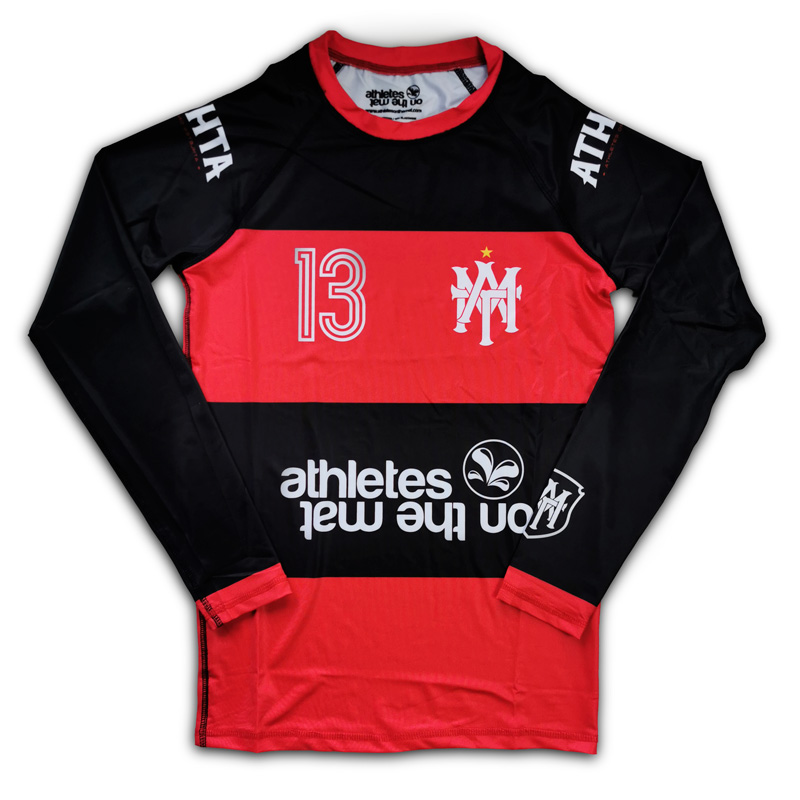
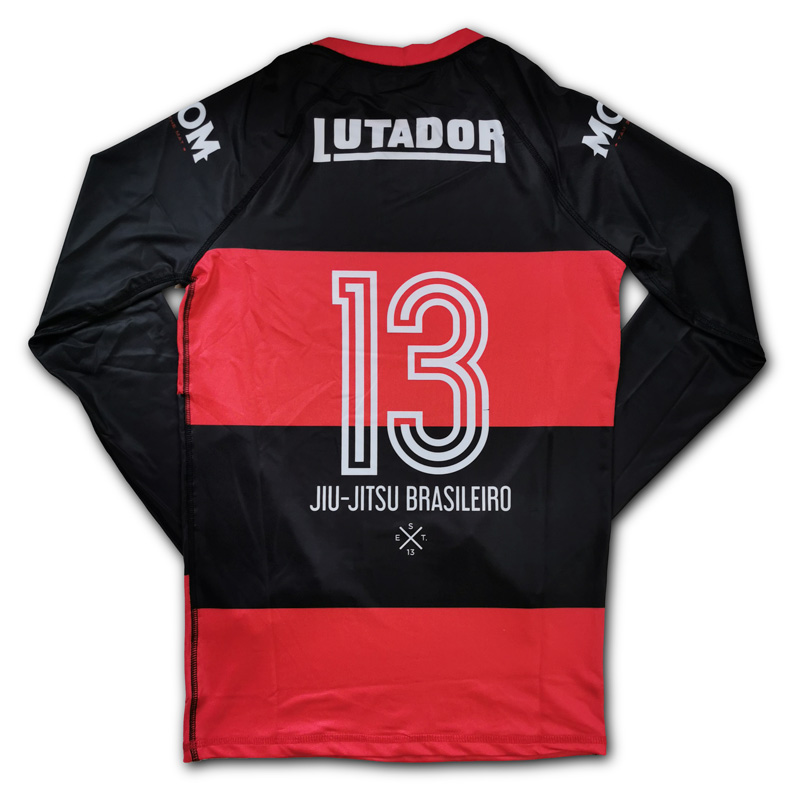
Lutador Rashguard, Long Sleeve, Grappling
50,00€
Lutador rashguard, long sleeve, red and black. In Portuguese, lutador means fighter. The name sets the tone: bold colours, a compression cut, a garment built for grappling, no-gi jiu-jitsu and MMA.
The colours of Rio
Brazilian jiu-jitsu took shape in Rio de Janeiro from the 1920s onwards, in the Gracie family academies, before spreading across the world. That is where the art found its current form, its vocabulary and much of its culture.
The Lutador rashguard borrows the city’s red and black, two colours that are not discreet and make no attempt to be. The result is direct, with no fussy gradients or crowded patterns. On the mats, you spot it from across the room.
What long sleeves change
Three concrete differences from a short sleeve.
The first is abrasion. Forearms take most of the friction: wrist control, guard passing, digging out of a crucifix. A long sleeve absorbs what your skin would otherwise take head on.
The second is temperature, and it cuts both ways. In a cold gym or during the warm-up, the sleeve keeps the muscles warm. In an unventilated room in August, it becomes a burden. Plenty of people rotate by season.
The third is how it looks, and that matters more than most admit: a design on a long sleeve is visible from guard, on the feet, in photos. It is often the reason one rashguard stays in rotation and another stays at the bottom of the bag.
Colours and competition
Straight answer on this one. IBJJF no-gi rules allow three options only: black, white, or black and white, with at least 10 % of the athlete’s rank colour. A red and black rashguard will not clear a uniform check at an IBJJF event.
That is not a flaw, it is a choice of purpose. The Lutador is made for daily training, open mats, camps and any competition without a colour code, which covers the large majority of events. If you are on the IBJJF circuit, keep a black or white rashguard in your bag for weigh-in days.
How we check these reviews. The reviews published on this page come from customers invited by email after their order. Every review is checked manually before publication. Reviews are sorted from newest to oldest by default; you can change this order. We never alter the content of a review. Read our review publication rules.
 Lutador Rashguard, Long Sleeve, Grappling
Produits suggérés

Reviews
There are no reviews yet