





What we mean by streetwear
Everything here is made to be worn off the mats. It is not training kit, and it does not pretend to be: no compression, no quick-dry claims, no technical fabric. Cotton, prints, and cuts that work at the gym door, in the car on the way home, and on a Saturday afternoon.
The line exists because jiu-jitsu does not stop when the session does. Most people who train think about it far more than the four hours a week they spend on the mat, and they would rather not advertise it in a competition rashguard.
The three families
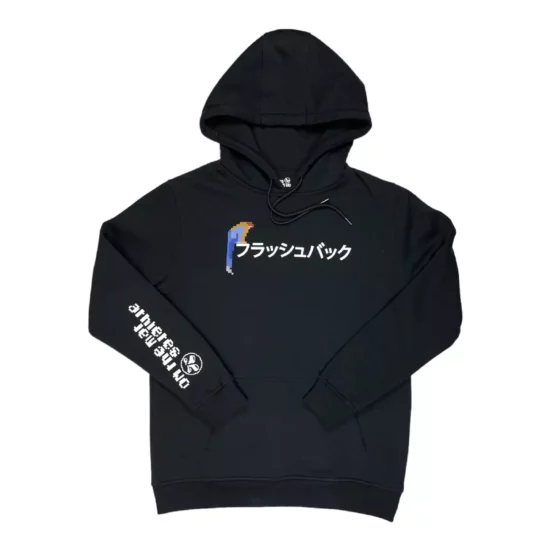
Hoodies and sweatshirts are the piece people reach for after training, when body temperature drops fast and the gym door opens onto a cold car park. Heavy cotton, screen printed rather than sublimated, which is what lets the print soften with age instead of cracking.
T-shirts are the everyday layer, and the one that takes the most washing. Screen printing again, for the same reason.
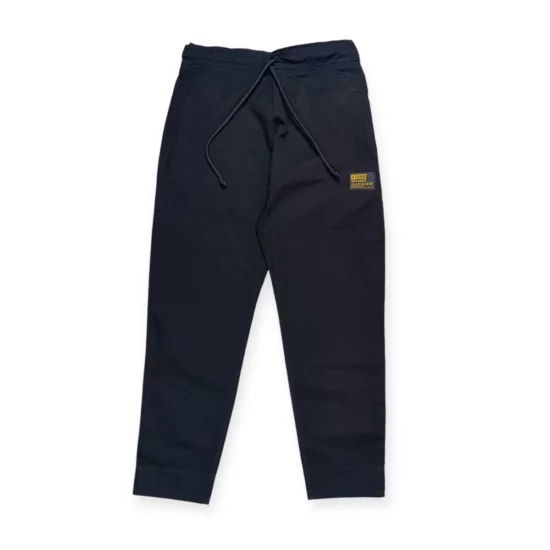
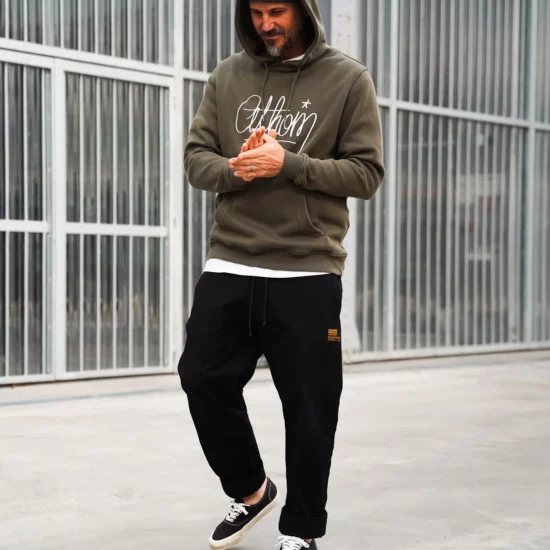
Pants round out the set for anyone who wants the whole thing to match, or simply prefers something less formal than jeans on a training day.
Printing, and why it matters
Screen printing lays ink on the surface of the fabric. It gives a print you can feel with a fingertip, saturated colours, and a texture that changes over the years: the ink softens, the edges lose their sharpness, and the garment starts to look worn in rather than worn out.
The trade-off is that a screen print does not like heat or aggressive washing. Turn the garment inside out, wash at 30 °C, skip the tumble dryer, and never iron directly over the print. Do that and a printed hoodie outlives several technical rashguards.
Sizing
Streetwear is cut looser than training kit. Take your usual size for a normal fit, or go one up if you like a relaxed shoulder line, which is how most hoodies are worn now.
Cotton shrinks slightly on the first wash, mostly in length. Between two sizes on a hoodie, the larger one is the safer call.
Limited runs
Some designs are produced once and not repeated. When a size is gone it is gone, and the piece moves to the outlet rather than being reprinted. That is a deliberate choice: a small brand that reprints everything ends up looking like every other small brand.