
Table des matières
Washing and caring for your BJJ gi
Brazilian jiu-jitsu gis are made mostly from cotton, or from a cotton and polyester blend.
Here are six tips to wash a BJJ gi properly, keep its colour and avoid excessive shrinkage.
1 – Get the gi out of the bag the moment you get home
“Never put off until tomorrow what you can do today.” That applies to your gi as well.
Leave it to stew overnight in your training bag and expect a powerful smell when you pull it out.
“Do not wait.”
As soon as you get home, take the gi out of the bag and hang it up to air dry. That is the first habit to build.
Blood stains
If there are blood stains on a white gi, do not scrub hard: you will only spread them.
Avoid hot water too. It makes the blood coagulate and sets the stain deep into the fibres.
We recommend soaking the stained area overnight, in which case the stain usually lifts on its own, or dabbing it with a cloth soaked in cold water.
Why it is urgent
Cotton absorbs a great deal of moisture, your sweat in this case, and releases it only with difficulty.
By the end of training you own a very wet gi that has spent two hours working as a floor cloth and has picked up a fair range of bacteria.
Bacteria need two things to multiply: moisture and a temperature that is neither too low nor too high.
Your gi is the perfect place.
NOTE: If you train more than three times a week, you will need a small collection of gis, and a compromise with the rest of the household: they take up space and they are not exactly decorative. Necessary all the same.
2 – Where and how to dry it
Sun or shade?
A white gi can dry in the sun: it comes out brighter and cleaner.
A dark gi (blue, black, green) belongs in the shade. The sun works on those colours exactly as it does on a white gi, and fades them.
What actually happens to a gi hanging out to dry
Three mechanisms are at work, and not in the proportions people assume.
Drying itself does most of the work. Bacteria need moisture to multiply; dry fabric takes away what they live on. That is the main reason a gi hung up smells acceptable while a gi balled up in a bag does not.
Ultraviolet light comes second, on a white gi in the sun. It breaks down the molecules that turn white into grey, and it has a real germicidal effect on the surface.

Ozone (O3), sometimes called activated oxygen, is a powerful oxidiser used in industrial disinfection.
Ozone plays the third role, and it is worth being honest about its scale. When an ozone molecule meets a bacterium, oxidation does destroy that bacterium. But outdoor air contains ozone at a few tens of parts per billion, a long way from the doses used in an industrial disinfection tunnel. Its contribution is real but marginal.
The point to remember: hanging your gi out does not replace a wash. It slows things down until the machine, nothing more.
How to hang it
Put the jacket and the pants on two separate hangers, well apart. They do not dry at the same speed, because the fabric weight and the surface area are different.
As you hang the gi, pull on the sleeves and on the bottom of the pants. That puts the fibres back into position and limits shrinkage as it dries.
Once it is dry, the gi can go into the washing machine.
NOTE: Drying the gi before it goes in the machine keeps white fabric brighter, avoids the yellowish marks that build up around the collar wash after wash, and stops smells from settling in. This is the step people skip most often.
3 – The machine wash
You now have a dry gi with no living bacteria on it. Time for the wash, to flush all of that away.
NOTE: Wash the gi on its own. No shirts, no T-shirts, no socks, and above all do not mix colours.
Temperature
Your gi is mostly cotton, and therefore very sensitive to temperature.
The maximum is 30 °C. Above that, the gi shrinks wash after wash.
We recommend a cold wash.
At that temperature the gi barely moves, if at all.
NOTE: On a new gi, if you want to bring it closer to your build, you can try warmer washes (30 to 40 °C). Go step by step: once it is too short, there is no way back.
A rough gi, and baking soda
NOTE: If the gi feels rough once dry, that is the limescale in your water, not the fabric.
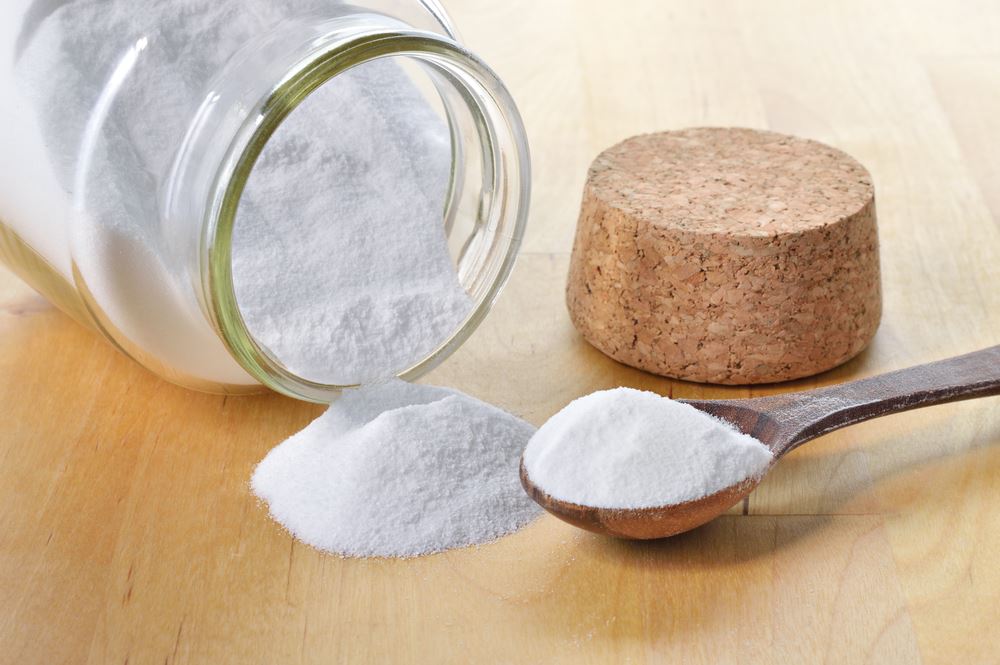
Skip the chemical softener. Add sodium bicarbonate (baking soda) to your next wash instead: cheap, environmentally friendly, and it softens the fabric.
4 – The tumble dryer: a warning
As we said above, cotton is sensitive to temperature.
Putting a damp gi in the tumble dryer amounts to giving it a hot wash. The result is a shrunken gi.
NOTE: If your gi has vinyl patches, the rule matters twice over: heat damages the print and lifts it at the edges.
On a gi with a great many washes behind it, the question largely disappears: the fibres have stopped moving.
As above: on a hanger, ends pulled straight, in the open air. That is the ideal.
5 – Setting and keeping the colours
Caring for a BJJ gi also means keeping its colour, whether it is black, blue, red or green.
For a new gi, before the first wash, turn to your grandmother’s method: soak it for a few hours in cold water with white vinegar and coarse salt.
Once the gi has had its christening, dedicated products will keep the colour up.
Supermarkets sell them, both to keep whites bright and to revive the depth of dark shades.
6 – Store it, rotate it, do not lend it
Storage
Once it is clean and dry, take the time to fold your gi. Do not stuff it into the wardrobe in a ball: you save space and you look after the cotton.
Rotating between several gis
If you train three times a week or more, owning several gis and rotating between them is a good idea.
That rhythm means frequent washing, and washing plus drying takes time. With several gis, you give each one the time to dry and to be washed properly.
You also wash each gi less often, since you wear a different one every session. That alone extends their life.
Do not lend your gi
This is more a personal preference than a practical rule, but here is the reasoning.
First, wearing your own gi with somebody else’s sweat in it is not pleasant, and if it has not been washed in between, it is not hygienic either.
Second, whoever borrowed it will very likely take it home and wash it. And as we have seen, washing a gi the wrong way weakens it.
Hygiene in general
A clean, well-kept gi is pleasant for you, but above all it is basic hygiene towards your training partners, and a mark of respect.
There is nothing worse than rolling with a partner whose gi smells foul.
To round this off, here is an entertaining video from Jits.fr showing what to do with your gi once training is over. The commentary is in French.
There you are: you now know how to wash a BJJ gi and make it last.